Surgery » Breast Augmentation
Since the clinical introduction of silicone breast implants in 1963 by Croning and Gerow, five decades of cumulative medical research and evidence-based practice have shaped modern implant design.
Today’s 5th generation cohesive gel silicone implants offer exceptional safety profiles, fully cleared by the U.S. Food and Drug Administration (FDA) and the Israeli Ministry of Health.
Shapes: Available in round (providing upper-pole fullness) and anatomical/teardrop (replicating a natural slope).
Profiles & Projection: Ranging from low to extra-high projection, defining how far the implant extends forward from the chest wall.
Texturing & Gel Viscosity: Available in smooth or textured outer shells, and varying gel cohesiveness—from soft, flexible gels to highly cohesive, form-stable gels.
The most significant advance in modern breast surgery lies not just in implant materials, but in tissue-based planning systems. Rather than forcing soft tissues to adapt to an arbitrary implant volume, modern dimensional planning measures individual tissue dimensions and skin stretchability. This scientific approach maximizes aesthetic outcomes while protecting against long-term complications such as tissue thinning, parenchymal atrophy, or skin stretch damage.
Implant selection is never arbitrary. During the consultation, Dr. Sarit Cohen conducts a rigorous anatomical evaluation based on objective tissue metrics:
Chest wall width & symmetry
Base breast width (the primary deciding factor for implant selection)
Sternal notch-to-nipple and nipple-to-inframammary fold distances
Parenchymal thickness and skin envelope elasticity
Example: A 300 cc implant will appear subtle and balanced on a tall patient with a broad chest, whereas the same volume would look disproportionate on a patient with a narrow frame.
Implant pocket selection is determined by soft tissue coverage:
Submuscular (Dual Plane): Recommended for slender women with thin native breast tissue (less than 2 cm pinch test) to provide a smooth muscle cushion over the upper pole and prevent implant visibility.
Subglandular (Above the Muscle): Ideal when native breast tissue provides adequate natural coverage (greater than 2 cm pinch test).
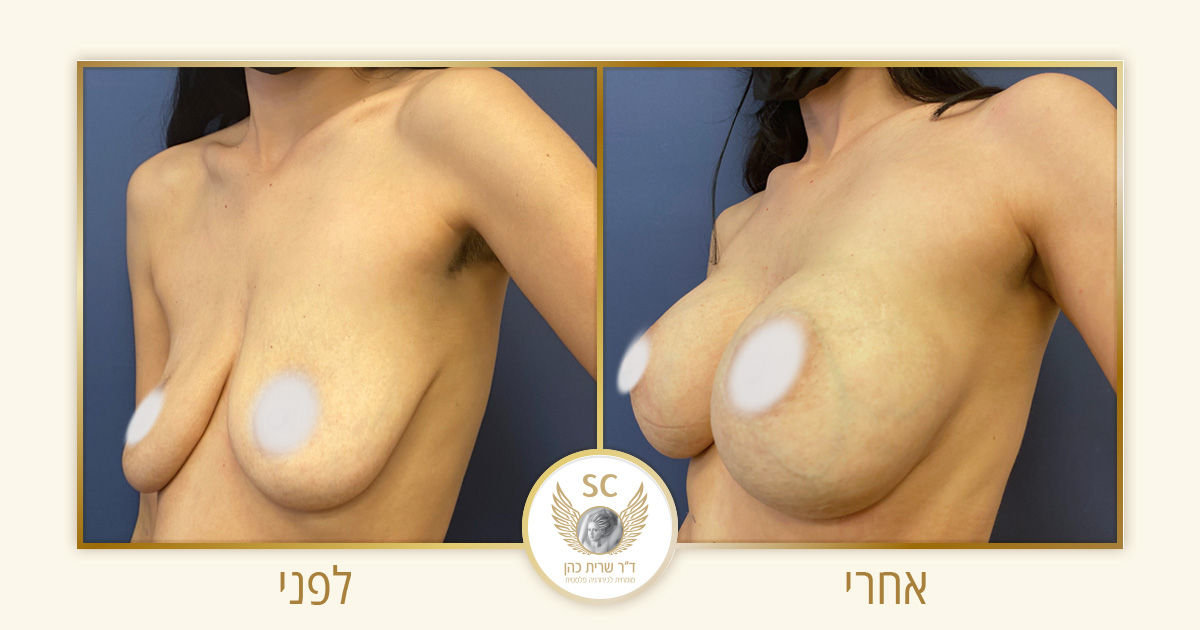
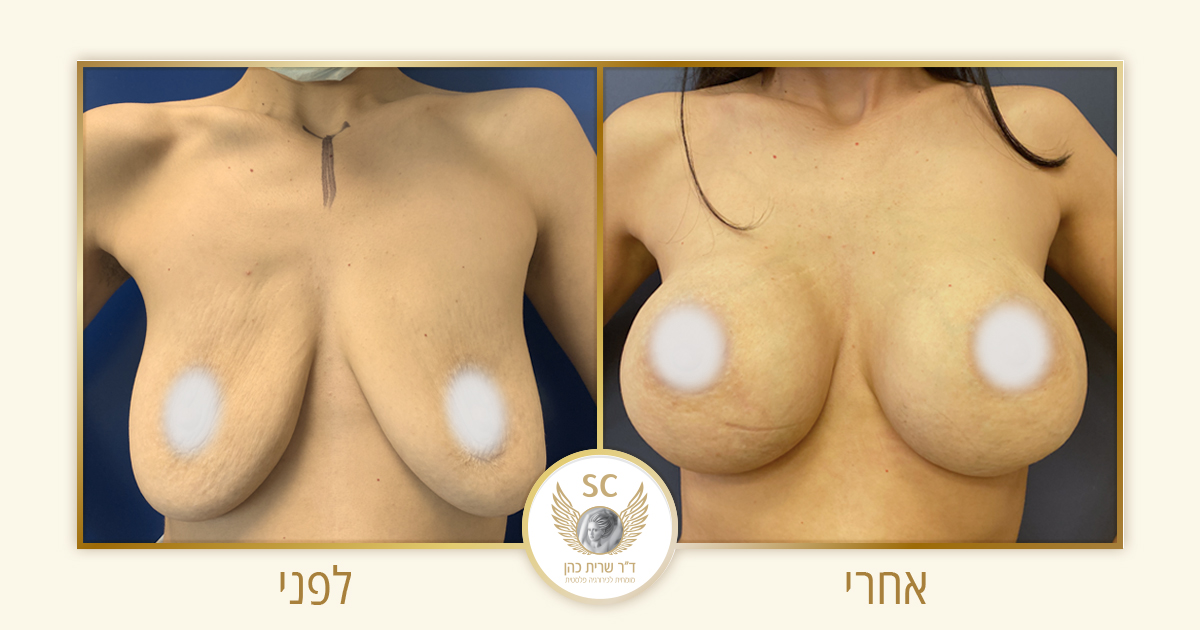
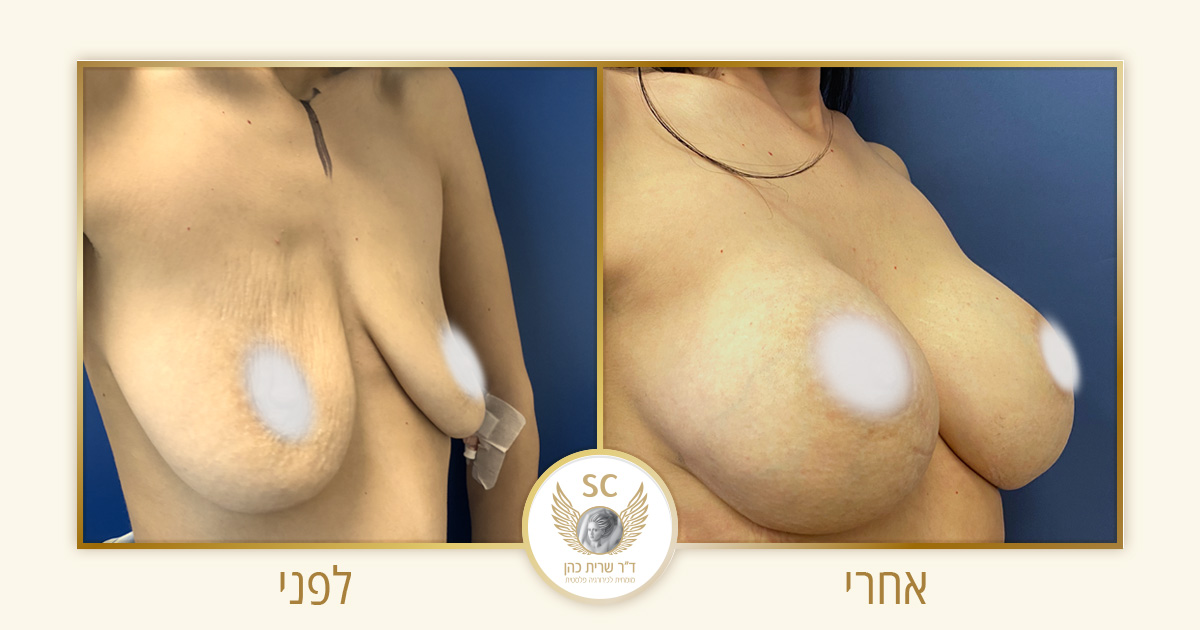
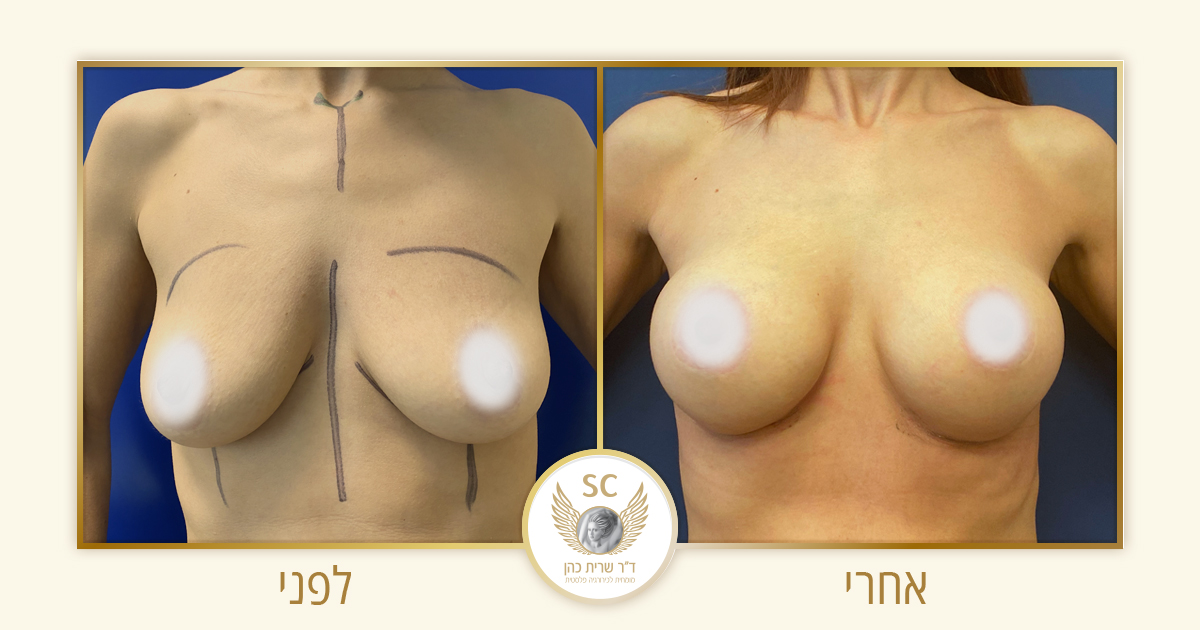
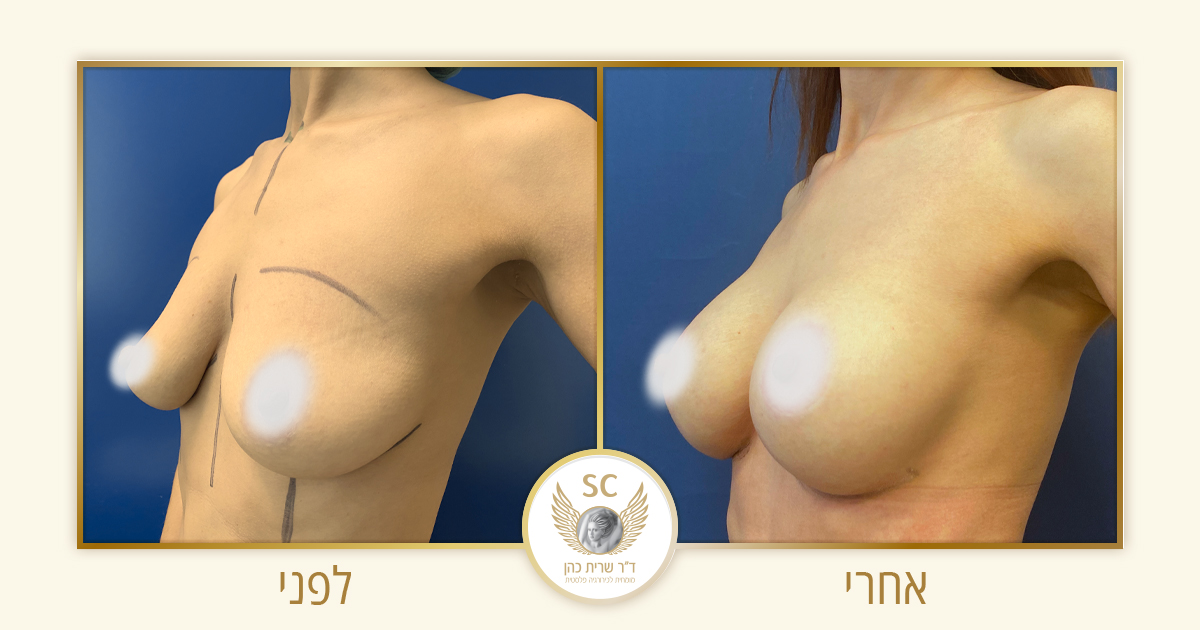
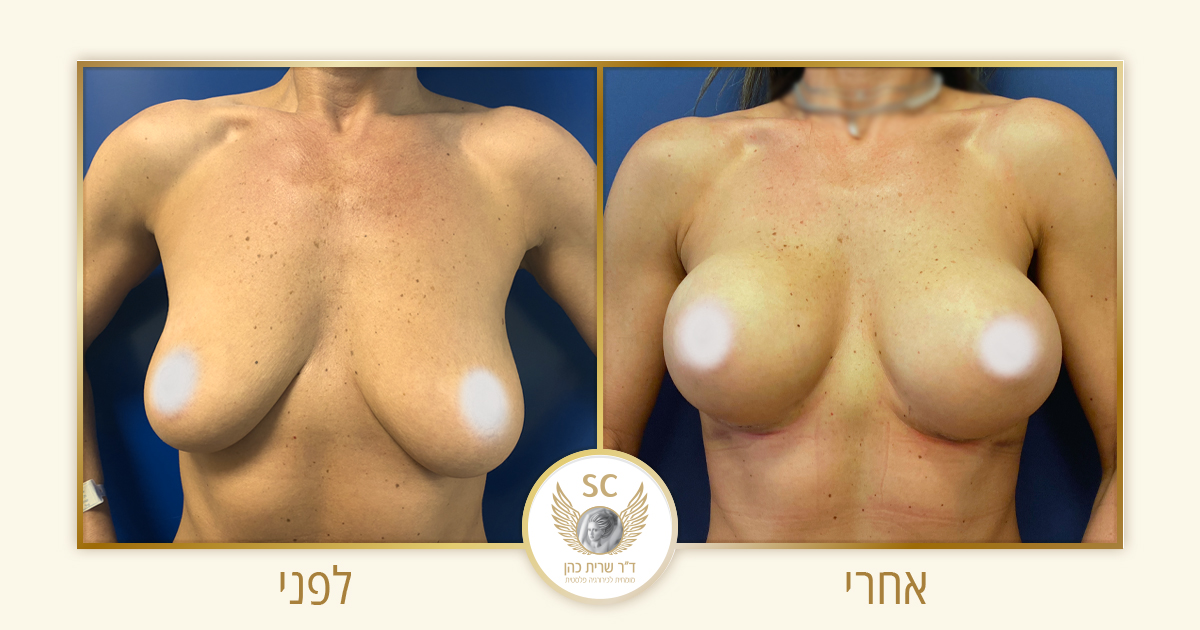
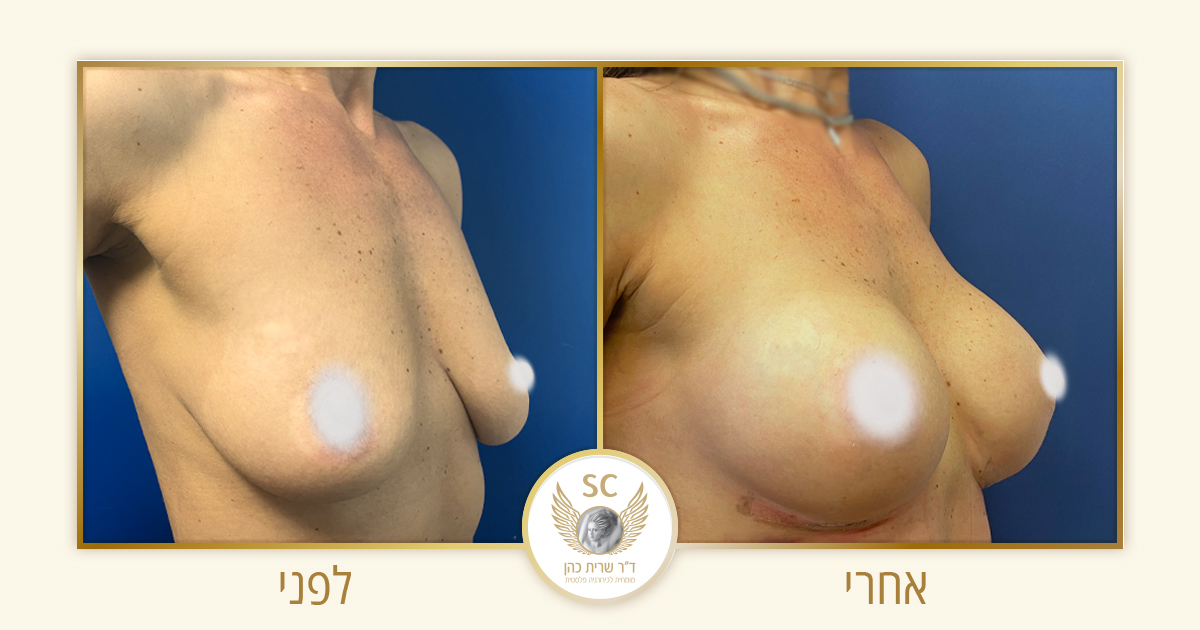
Augmentation vs. Mastopexy: Breast implants alone cannot correct moderate-to-severe breast ptosis (sagging). Attempting to enlarge a sagging breast without a lift results in a “snoopy dog” or “double-bubble” deformity. In cases of volume loss combined with skin laxity, a combined augmentation-mastopexy is required.
Impact on Breastfeeding: Because the implant pocket is created behind the glandular tissue (subglandular or dual-plane) without disrupting the milk ducts, breast augmentation does not impair a woman’s ability to breastfeed.
Surgical risks are generally low when performed by an experienced plastic surgeon:
General Surgical Risks: Minor bleeding/hematoma (~1%) and infection (~0.5%).
Sensation Changes: Transient changes in nipple sensitivity resolve within 6 to 12 months in most cases; permanent altered sensation occurs in approximately 2% of cases.
Capsular Contracture: The formation of a firm fibrous scar capsule around the implant. While low-grade capsule formation is a natural response, clinical contracture (Baker Grades III/IV) occurs in 3–5% of cases and may require surgical capsulectomy and implant pocket modification.
Rippling & Asymmetry: Prevented through accurate volumetric matching and appropriate tissue coverage selection.
We use “cookies” to improve your browsing experience and for statistical analysis. Continued use of the site constitutes agreement to this. For more information, please refer to our Privacy Policy.